
by Rhombus Ticks
Voting No on Marblehead’s June 9 override will cost the typical homeowner an estimated $76,000 in property value over ten years. The most expensive option on the ballot is the only one where the homeowner nets positive every single year. That’s the inversion. That’s the story. They say the only things you can’t avoid are death and taxes; sometimes NOT paying taxes is the worst choice you can make. The town is mostly leaning toward Yes. The remaining undecideds are considering rolling the dice in a rigged casino, and they need better facts before June 9.
This isn’t a story about civic duty or the power of libraries. It’s about the basic fiscal position every Marblehead homeowner has a stake in, and what they haven’t been told. There is one path that improves their position. Every other direction is yuck.
The 10-Year Table (Central Scenario)
Median $950,000 Marblehead home. Each cell = cumulative net position (property value change minus cumulative additional taxes paid), nominal dollars.
| Year | No Override | Tier 1 ($9M) | Tier 2 ($12M) | Tier 3 ($15M) |
| 1 | −$22,800 | −$9,450 | −$1,200 | +$7,050 |
| 2 | −$38,000 | −$16,073 | −$2,430 | +$11,213 |
| 3 | −$49,400 | −$21,293 | −$3,691 | +$13,913 |
| 4 | −$59,280 | −$25,967 | −$4,983 | +$16,001 |
| 5 | −$66,880 | −$29,810 | −$6,307 | +$17,195 |
| 6 | −$71,440 | −$32,539 | −$7,665 | +$17,208 |
| 7 | −$76,000 | −$35,293 | −$9,056 | +$17,179 |
| 8 | −$76,000 | −$36,362 | −$10,483 | +$15,396 |
| 9 | −$76,000 | −$37,459 | −$11,945 | +$13,568 |
| 10 | −$76,000 | −$38,583 | −$13,443 | +$11,695 |
Note the $88,000 delta between “No” and Tier 3 by year 10. Tier 3 returns over $7,000 in the first year and pays year after year. Tier 1 is still absolute yuck; partial cuts signal to the world that Marblehead is a dying town. Tier 2 is the boring middle: no gain, modest pain, politically viable, and rhetorically the weakest position. Again, more yuck. These numbers aren’t magic. Math is math.
There are two forces at work. The tax burden math takes the override amount, divides it across Marblehead’s ~$9.5 billion taxable base, and compounds at 2.5% per year per Prop 2½. The median $950K home pays $900, $1,200, or $1,500 in year one for Tier 1, 2, or 3 respectively.
The property value math is elemental. Library decertification plus 56 municipal jobs lost plus COA closure plus rec/health gutted indicates a town in decline. That’s going to cost the people of Marblehead. Assume an 8% endpoint loss (and that’s conservative) under Black (1999) and Bayer/Ferreira/McMillan (2007) capitalization research applied to the library and bundled services, and the pattern starts to show.
You don’t need peer-reviewed research to know housing markets price civic infrastructure. Current Marblehead real estate listings already say so. Active listings sell properties on “easy access to downtown Marblehead, several schools, restaurants, coffee shops, boutiques, theaters, parks, the Rail Trail” and “the walkable lifestyle that defines Marblehead’s Historic District.” The brokers’ own Coastal Neighborhoods profile of Marblehead closes with “the highly-regarded school system and historic downtown are additional draws.” Realtors don’t write that copy because it’s pretty. They write it because it moves houses. Capitalization isn’t a theory waiting to be tested. It’s already priced in. Now imagine what those same listings read like when one of the headline amenities, the renovated $10 million library, is closed.
This model doesn’t even include the doom-loop feedback of declining values producing a declining tax base producing further cuts. It can’t capture the out-migration of families with children who want a town where their kids can read. It doesn’t include the renters who don’t want the stigma of living in one of the only towns in a state full of well-funded libraries that doesn’t pay for its own. Every excluded factor makes the No Override column WORSE, not better.
Life and Property
“Life and property” isn’t evil as Kezer frames it. It’s a short-sighted methodology that will cost Marblehead if adopted.
Life is more than triage.
The library fails Kezer’s test because the test was built to make it fail. Triage logic asks one question: who dies without this service? And a library can never beat police and fire on that question.
But pick a different question, any other question a municipal budget is supposed to answer, and the library wins.
- Which service protects property values? Library.
- Which serves the most residents? Library. 244,961 interactions a year in a town of 20,000.
- Which returns the most value per dollar spent? Library. $5.2 million in services on a $1.49 million budget.
Framing the most beloved institution in the state as ballast isn’t tough leadership. It’s how a methodology disqualifies itself.
The Prop 2½ Trap
Turn the wayback machine to 1980 and Prop 2½ was set up as homeowner protection. That was the original case. But the protection has been turned into a mechanism for depreciating the value of the biggest asset most homeowners have. It’s a trap.
The $10 Million Paradox
Marblehead finished a $10 million library renovation in late 2024. The renovation passed on a magnificent override campaign run by EuRim Chun, which won her Essex Media Group Person of the Year because this state celebrates libraries. Marblehead is voting on whether to close that same building in June 2026.
Hold both facts in your head.
The Marblehead Liberty Foundation
The Marblehead Liberty Foundation opposes the override despite Town Meeting voting 1,227 to 159 to send it to the ballot. Their response to an 88% margin wasn’t to accept the vote. It was to call a “People’s Special Town Meeting” to undo it.
Jack Buba is the only MLF member who has put his name forward. No published bylaws. No public membership. No accountability. Just a “small club” whose pitch will cost Marblehead homeowners $76,000 a house.
What’s the pitch? A “free-cash bridge.” One year of free cash to keep the library and COA open while the town “restructures.” Here’s why that math doesn’t close: free cash is a one-time reserve. The deficit driving this fight is structural and recurring. The “restructuring” plan has no public documentation attached. The bridge buys exactly one fiscal year. Then the same fight returns in 2027, with one less reserve in the tank and the library staff already gone. It still works out to $76,000 out of your pocketbook. Just delayed.
This isn’t a conspiracy theory about a sex dungeon in the basement of a pizza place. It’s something more annoying: an informal network with no published membership, no public accountability, and no need to defend its claims in writing. Not a conspiracy. A confederacy of molemen.
The Decertification Cliff
The decertification cliff is real. It is governed by MGL Ch. 78 §§ 19A and 19B and the regulations at 605 CMR 4.00, the statutes that govern free public library service in Massachusetts. Failure to meet the Municipal Appropriation Requirement under 605 CMR 4.01 strips a town’s library of certification, which means the loss of matching state aid through the MBLC. Massachusetts takes its libraries very seriously, and failure to keep certification means Abbot will be expelled from the NOBLE network of 17 libraries. No interlibrary loans. No using your library card at other libraries. The system is designed to make sure everyone pulls their weight.
The loss of grant eligibility (and that’s a lot) carries a THREE YEAR recovery period. You can’t go to Salem, Swampscott, or Beverly to check out books.
This isn’t the first time a town has done this. In 2014, Wareham rejected an override and the library was gutted. Wareham spent $5.68 per capita on its library while the state average was $35.81. Twelve years later, the town still hasn’t recovered.
Ask someone from Wareham how they feel about losing their library. That Marblehead library card will become a useless piece of plastic.
The Comparison Towns
Let’s do some comparison, shall we? Massachusetts has exactly 4 towns without certified libraries out of 351. As of January 2026: Alford, Monroe, New Ashford, and Savoy. All four are on the far west of the state with populations between 120 and 700, residents who have explicitly opted out of paying for public services.
The good news for Alford is they have paid the lowest property taxes in the state since 1988. And they don’t have a library. Marblehead wants to join this “elite” Middle of Nowhere club.
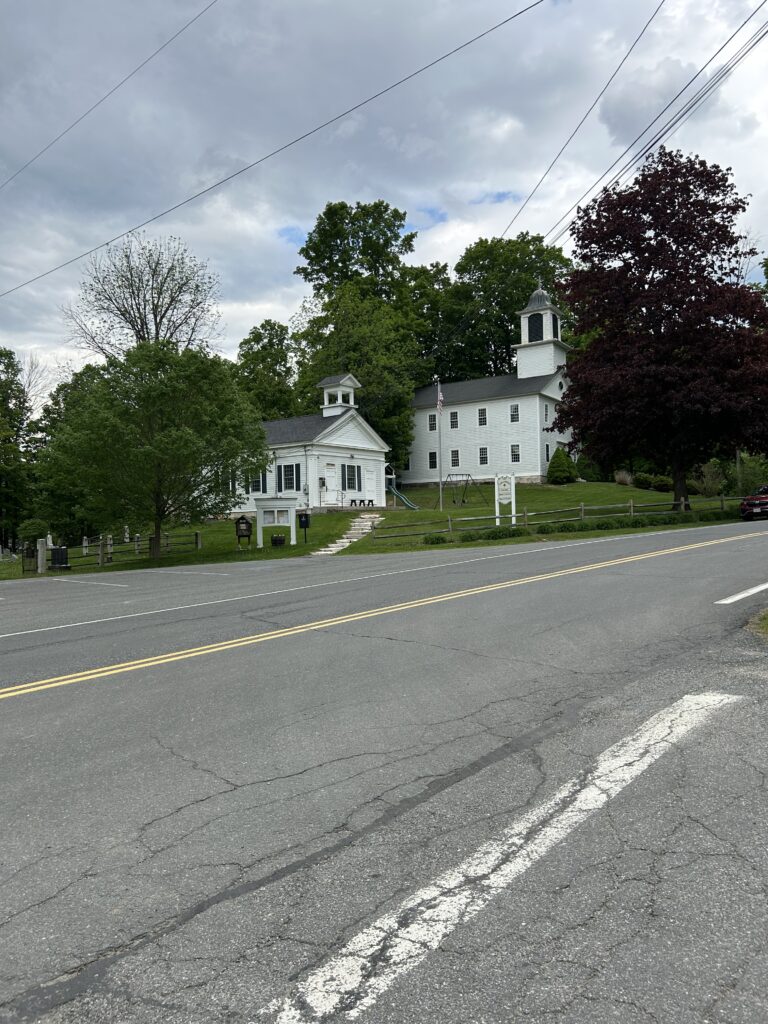
Speaking of out west: Holyoke, the poorest city in the state (median income $37,954), funds a gorgeous four-floor public library open 12 hours on weekdays. Orange, a paper-mill town with Section 8 housing across the street from the library (median income ~$50,000), funds Wheeler Memorial Library. Greenfield (median income ~$56,000) not only pays for their library, they just renovated theirs.
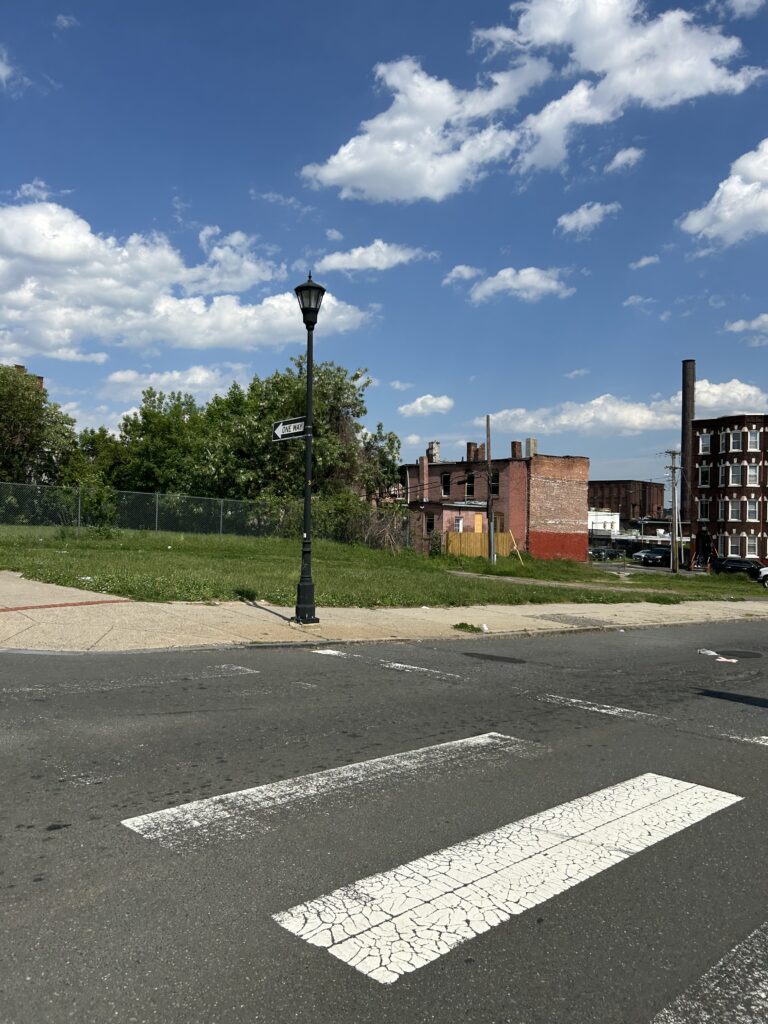

THEY understand the value of infrastructure. And that understanding is that if you pay for your infrastructure you live, and if you don’t, you become a ghost town no one wants to live in. The only towns without libraries are too small and too libertarian to want them. Marblehead would be a unique folly in the “tax free/people free” club.

Closing
The vote is June 9, 2026.
This isn’t a tax increase. It’s an intelligence test disguised as a property value referendum. The town just spent $10 million to update the library, and is now considering putting all that money into a giant bonfire, dousing it with gasoline, and lighting it on fire.
Who does Marblehead want to be?
Methodology
Inputs: median home value, household count, override amounts, Prop 2½ escalation, discount rate, capitalization rate. Sources: Zillow ZHVI March 2026; US Census ACS 2024; Marblehead Finance Committee; M.G.L. Ch. 59 §21C; Abbot Library FY25 self-report; Black (1999); Bayer/Ferreira/McMillan (2007); MBLC non-certified list, January 2026; MGL Ch. 78 §§ 19A and 19B; 605 CMR 4.00.
The model assumes housing markets have already partially priced in expected decline following S&P’s negative outlook revision on April 10, 2026; the Tier 3 net-positive figures represent removal of that priced-in negative signal rather than novel appreciation. The median-homeowner frame compresses real distributional differences across fixed-income seniors, recent buyers with high mortgages, and longtime owners with low assessments; the campaign addresses these separately.
Honest disclosure: no peer-reviewed study quantifies library closure’s effect on residential home values. The 8% endpoint loss for No Override is the most aggressive assumption in this model and bundles multiple service eliminations into a single “town visibly declining” signal. Conservative and aggressive scenarios bracket the central case at ±50%.